Finding the perfect space for your child is one of the most important decisions a family makes. When parents think about choosing a daycare , they are really looking for more than just a facility, but a place where their child will feel safe, develop at their own pace, and enjoy every day.
To find a good kindergarten for your child , you should evaluate not only the cost or proximity to home, but also the adaptation system, atmosphere, team, space, program, and daily communication with parents.
Here are 10 key criteria that will help you choose the best kindergartens :
- Soft adaptation is the possibility of gradual entry into a new environment.
- Small groups – more attention to the child’s needs.
- Qualified educators — experience, empathy, pedagogical education.
- Psychologist and speech therapist — professional development support.
- Secure area – controlled access, video surveillance.
- A high-quality program — development of speech, logic, and social skills.
- Movement and walks every day are a balance of learning and activity.
- Nutrition – a balanced menu taking into account diets.
- Transparent communication with parents – feedback, photos, recommendations.
- The child’s emotional comfort is the main indicator of the right choice.
If after the visit the child does not want to go home, this is the first good sign.
Public or private: which kindergarten is best for your child?
One of the first decisions parents make is whether to choose public or private kindergarten . Both formats have their strengths, and the choice depends on the needs of your family.
State format
- lower cost;
- standard program;
- larger groups;
- fixed schedule;
- recruitment through an electronic system;
- queue and point system.
Private kindergarten
- smaller groups;
- individual approach;
- modern methods;
- adaptation with parents;
- more language, sports and sensory activities;
- psychological support;
- possibility of admission during the year.
It is a private kindergarten that often becomes the best choice for families who want a smooth integration, stable contact with teachers, a faster start without a queue, and more attention to emotional development.
The best criterion is not “what is more prestigious,” but where your child will feel calm, safe, and natural.
Location and area: what to look for during your visit
Even the best program doesn’t compensate for inconvenient logistics. That’s why one of the basic criteria is a kindergarten close to home or on the way to work.
When the institution is conveniently located, adaptation is easier:
- the child is not tired in the morning;
- it is easier to stick to the regimen;
- it is convenient for parents to respond quickly;
- less stress in daily routine.
During your personal visit, pay attention to:
- secure entrance;
- closed area;
- cleanliness of premises;
- separate areas for sleeping, playing, and studying;
- lighting quality;
- noise level;
- smell in groups;
- access to bathrooms;
- organization of food.
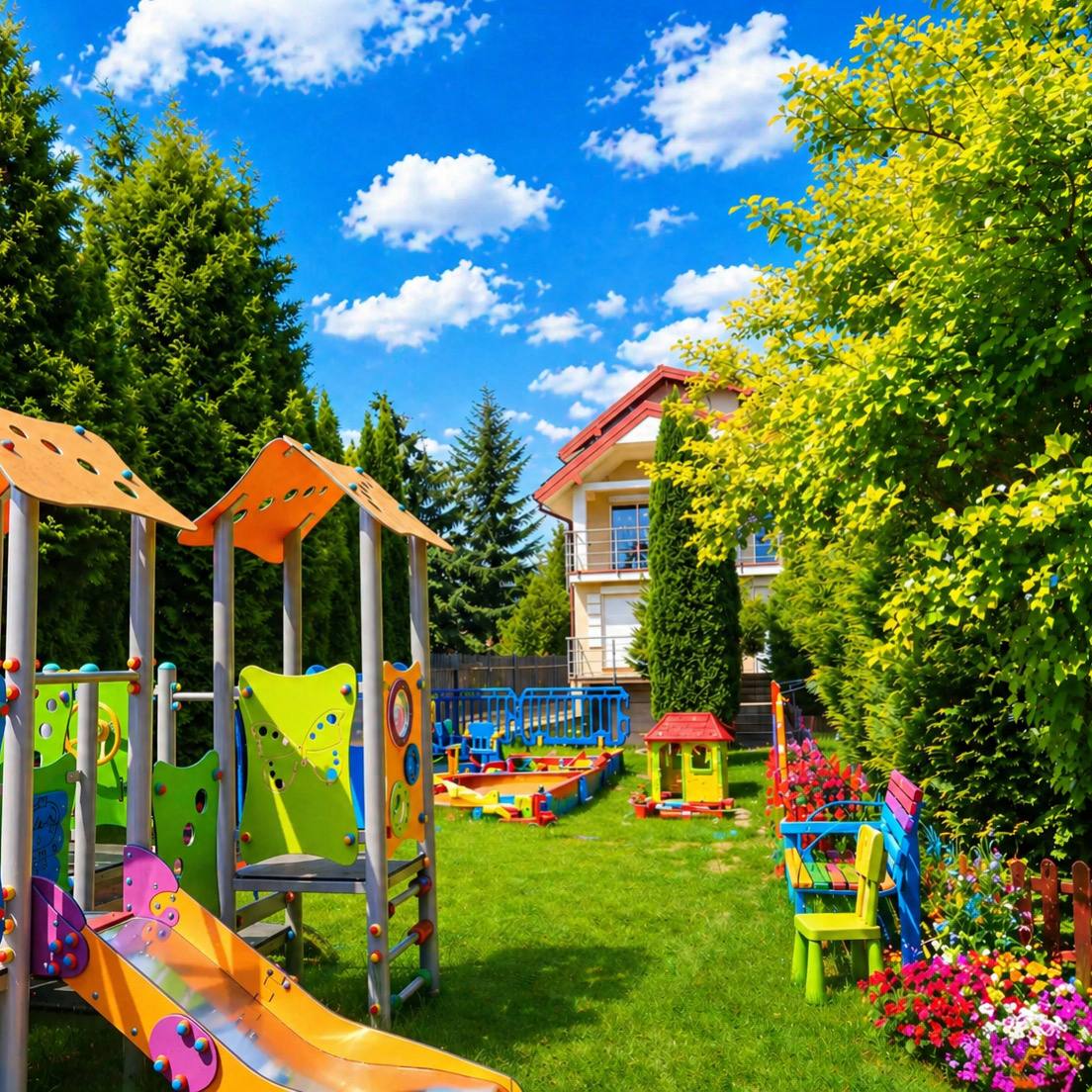
Be sure to evaluate the playground in the kindergarten separately . It should be:
- safe;
- adapted to age;
- with high-quality coating;
- with shaded areas;
- spacious enough;
- equipped for motor games.
It is the playground in a kindergarten that often shows the institution’s real attitude towards the daily development of children through movement, exploration, and free play. It is important that the area is fenced .
A good kindergarten is a place where it is comfortable not only in the classroom, but also in every corner of the space, which creates a sense of security and joy in the child every day.
Teaching staff and atmosphere in the group
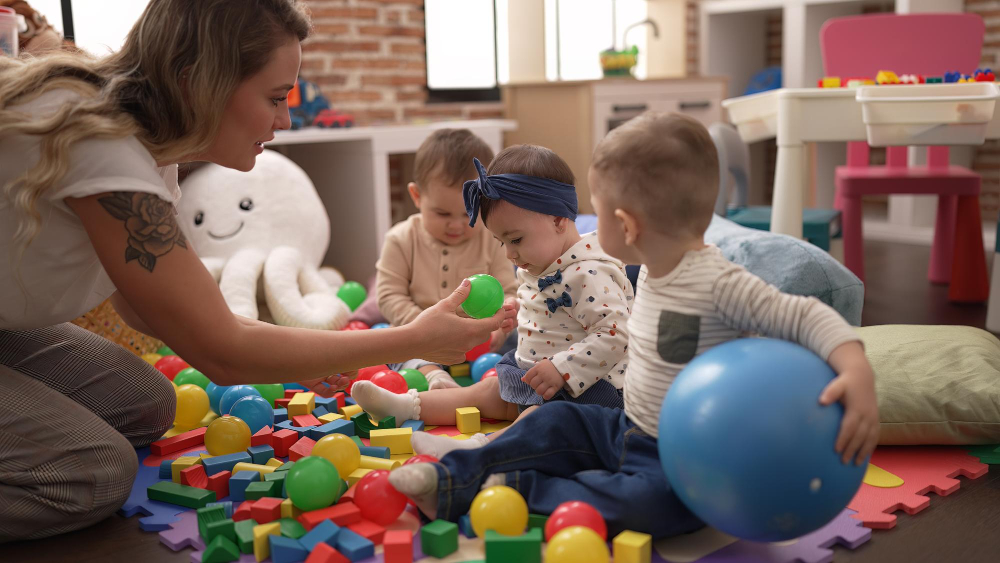
One of the most important selection criteria is the teachers in Polish kindergartens and the atmosphere they create every day. It is the team that creates a sense of security, trust, and a child’s desire to return to kindergarten with pleasure.
When getting to know the space, pay attention not only to diplomas, but also to the communication style:
- Does the teacher speak calmly?
- Does he/she address children with respect?
- Does he notice emotions?
- how he reacts to conflicts;
- Does it support independence?
- how to build contact with parents.
In modern institutions in Poland, more and more attention is paid to emotional intelligence, gentle support for adaptation, and partnership with the family.
An equally important indicator is the number of children in the group . The smaller the group, the easier it is for teachers to take into account the individual pace of development, character, and needs of the child.
Optimal when:
- in a group of up to 12–18 children;
- 2 adults work;
- there is an assistant or psychologist;
- children are divided by age.
The number of children in the group often determines how comfortable the adaptation will be and whether the child will receive enough attention. The attitude towards children, emotional comfort , is important .
Teaching methods and developmental classes
A modern kindergarten is not just care, but an environment where learning occurs naturally through play, movement, and exploration.
Parents often look for a Montessori kindergarten in Poland , but it is important to look wider: today many institutions combine several strong approaches at once.
The most common teaching methods in kindergarten :
- Montessori — independence, choice, development through materials;
- Froebel — play and exploration;
- Reggio Emilia — creativity and projects;
- sensory integration;
- development through movement;
- language blocks;
- early mathematics;
- soft skills.
The main question is not the name of the method, but whether it is right for your child. High-quality teaching methods in kindergarten always provide:
- speech development;
- logic;
- development of fine motor skills ;
- communication skills;
- independence;
- concentration;
- emotional stability.
If a facility only offers “lessons” but little movement, creativity, and free play, it’s worth asking additional questions.
Nutrition and hygiene in kindergarten
A child’s daily comfort directly depends on how the kindergarten menu and hygiene rules are organized.
When choosing, pay attention to:
- how many times a day do children eat;
- are there fresh vegetables and fruits;
- whether they cook on site or bring in catering;
- Is it possible to adapt the menu?
- as organized drinking of water;
- Do they control allergens?
This is especially important for families who need food for allergy sufferers in kindergarten . A good institution always has experience working with:
- lactose-free menu;
- gluten-free diet;
- excluding nuts;
- individual diets;
- doctor’s recommendations.
A quality menu in kindergarten is not only about satiety, but also about forming healthy habits for years to come.
Also pay attention to:
- cleanliness of bathrooms;
- hand washing frequency;
- change of bed linen;
- airing;
- sanitary condition of toys;
- individual towels.
Emotional comfort is also extremely important during meals. There should be an individual approach.
Preparing your child: what things will help with quick adaptation?
Even the best kindergarten for a child requires proper preparation at home. This is what often determines how easily a child will adapt to kindergarten .
To make the start smooth, you should prepare in advance:
- change of clothes;
- comfortable shoes;
- a favorite toy for the first days;
- a water bottle;
- a set of clothes for a change;
- napkins;
- small backpack;
- favorite pajamas for sleeping.
That’s why parents often ask what to buy their child for kindergarten . It’s best to choose things that help the child feel familiar and in control of the new space.
In addition to things, home rituals are also important:
- talk about kindergarten positively;
- read books about adaptation;
- practice short separations;
- adjust your sleep schedule;
- learn to eat and dress themselves.
It is this kind of preparation that greatly facilitates a child’s adaptation to kindergarten and helps the child quickly feel that the new space is safe, interesting, and familiar in a good way.
5 questions to ask the director before signing a contract
Even if you really like the space, the team, and the atmosphere, you should definitely ask a few important questions before making a final decision. They will help you understand how transparent the terms of cooperation will be and whether this good kindergarten for your child really meets your family’s expectations.
Pay special attention to the contract with a private kindergarten, because it determines not only payment, but also the rules of adaptation, attendance, safety, and communication.
Here are 5 key questions to ask the kindergarten director before signing:
1. How is the adaptation in the first days?
Ask:
- can parents be there;
- as the residence time increases;
- who is accompanying the child;
- how they react to severe stress.
This will help assess how professionally the child’s adaptation to kindergarten is organized.
2. What is included in the monthly payment?
Please clarify about financing:
- is food included;
- are there any additional payments;
- which is paid separately;
- Are there any speakers, speech therapists, or psychologists involved?
This way you can realistically assess the cost of training without hidden costs.
3. What are the rules for absences, holidays and contract termination?
This is one of the most important points in a contract with a private kindergarten.
Be sure to ask:
- is there a recalculation for illness;
- what is the notice period for termination;
- how freezing a place works;
- what happens during a long absence.
4. What are the internal order and security rules?
This is where the rules of the house are important:
- who can pick up the child;
- how the entrance to the institution works;
- what happens during illness;
- as organized sleep;
- what are the rules of walking;
- how conflicts between children are resolved.
The more transparent the rules of the internal routine, the calmer both parents and child will be.
5. How is communication with parents done?
One of the most valuable indicators of a good institution is open contact with the family.
Ask the kindergarten director a question :
- Is there daily feedback?
- do they send photos;
- how difficulties are reported;
- Are there meetings with teachers?
- how parents are involved in adaptation.
All details are contained in a detailed contract with a private kindergarten.
Conclusion: Trust your intuition and your child’s comfort
Even if an institution has a strong program, a beautiful website, and a modern space, the final decision should always be made not only rationally, but also emotionally.
When you are thinking about how to choose a kindergarten , focus on the main things:
- Are you comfortable in this space?
- Is there trust in teachers?
- Does the child feel curious?
- Is it easy for you to imagine a daily rhythm?
- Do the kindergarten’s values match yours?
Often, it is the parent’s intuition that will tell you which kindergarten will be best. Pay attention to the little things: the tone of the teachers’ voices, the child’s reaction to the space, the atmosphere during free play, the director’s openness to your questions.
If in this place the child looks calm, explores the space, makes contact easily and does not feel tension – this is a very strong sign that you have found one of the best kindergartens for your family.
Because the best choice is not the one that “everyone advises,” but the one where your child is happy.